
Capture
The microphone picks up nearby sound.
01 / ACCESSIBLE TECHNOLOGY · 2026
Turning everyday sounds into visual and vibration alerts.
THE CHALLENGE
A baby crying, a dog barking, or a fire alarm can call for attention. Deaf and hard-of-hearing people may miss those cues when they are delivered only through sound.
DFAssist—Deaf Feeling Assistant—explores a dedicated wearable that identifies selected nearby sounds and makes them visible and tactile.
HOW IT WORKS
The microphone picks up nearby sound.
An embedded AI model identifies a supported sound on the device.
The screen names the sound, and vibration draws attention to the alert.
THE SOLUTION
DFAssist is a dedicated wearable designed to recognize selected nearby sounds and alert its wearer through vibration and a clear message on screen.
It works offline and independently, without a phone or internet connection. Sound recognition stays on the device.
Examples include a baby crying, a dog barking, and a fire alarm. The aim is to make everyday sound cues easier to notice and identify.
EXAMPLE ALERTS
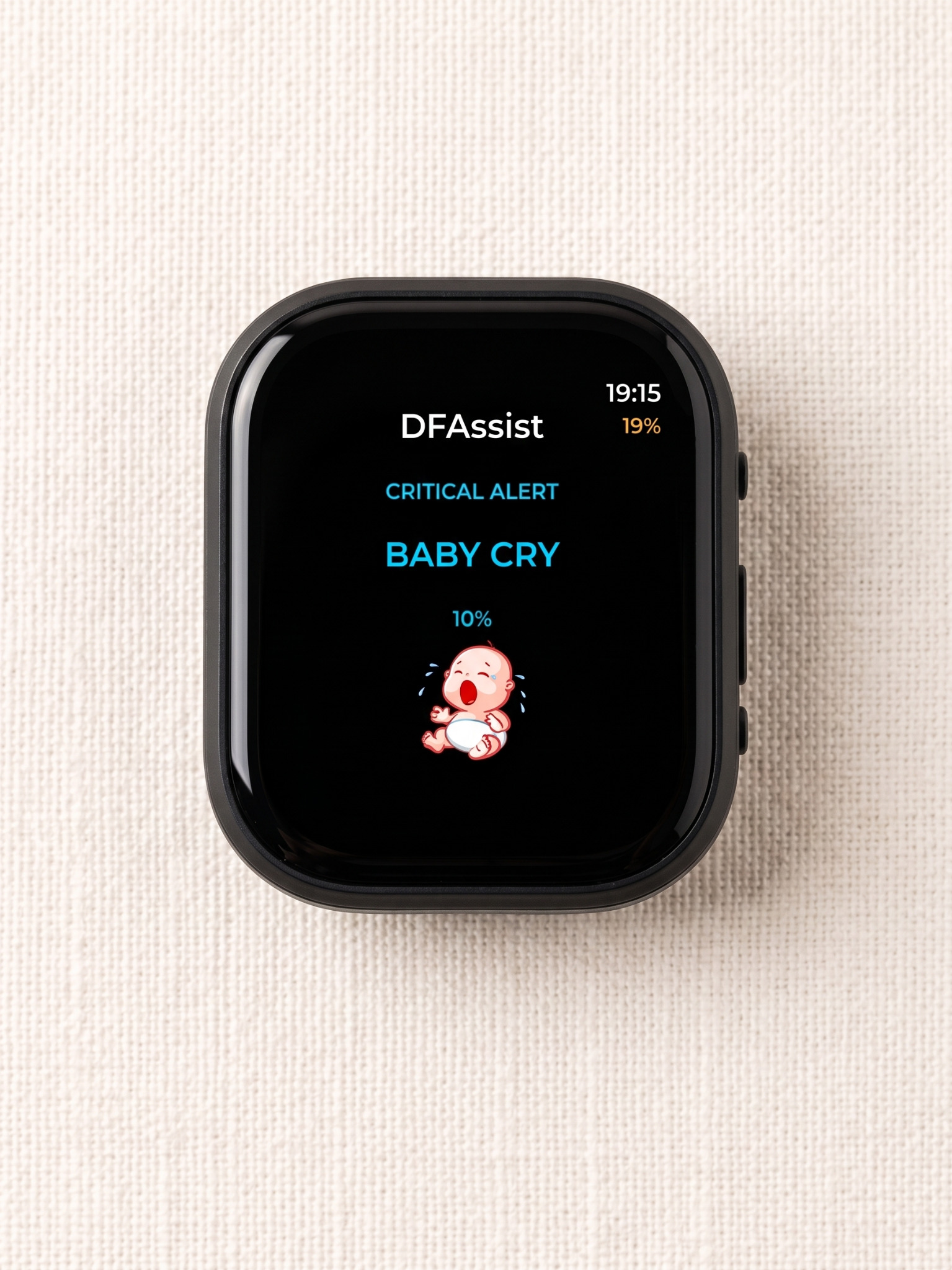
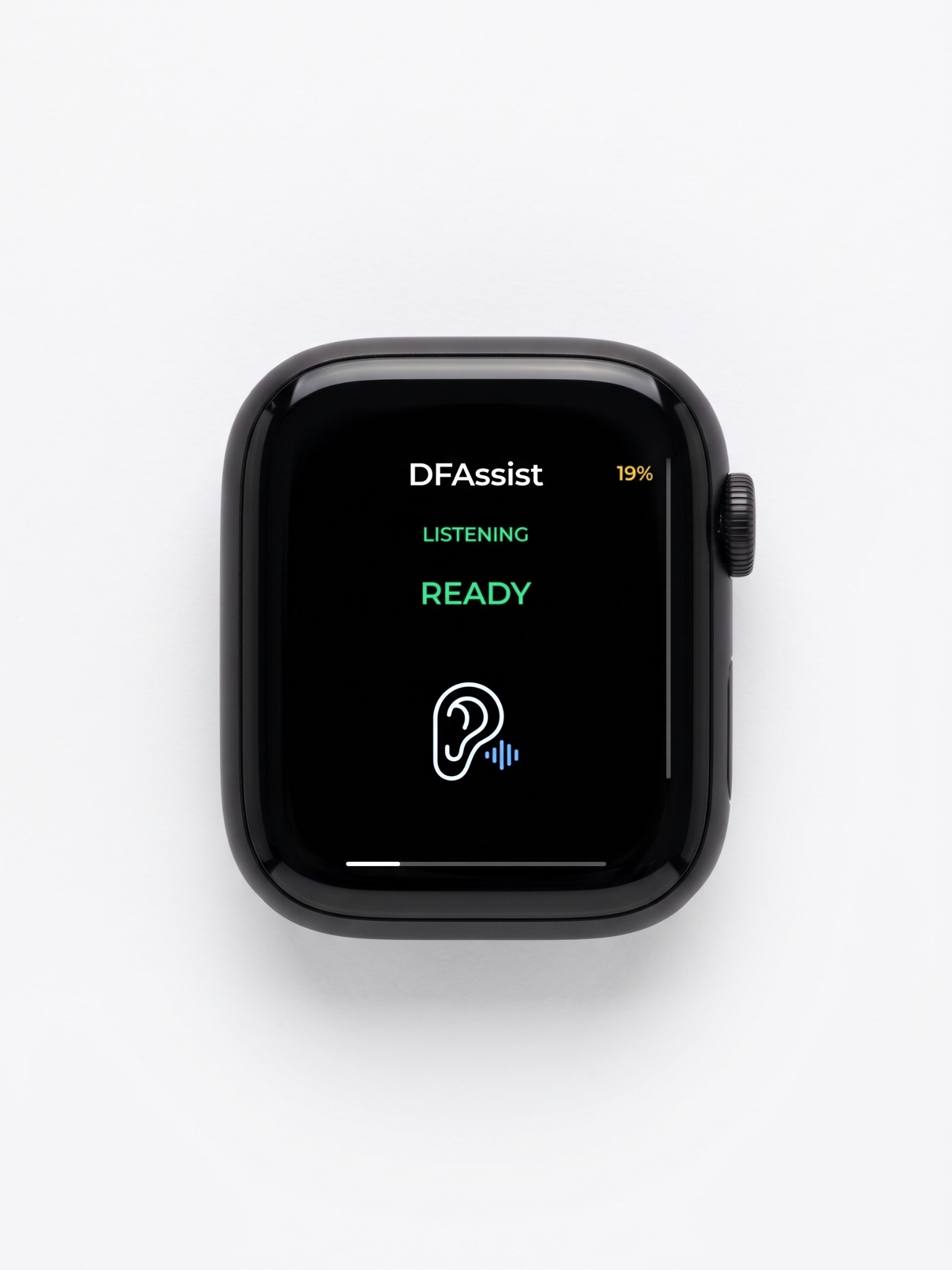
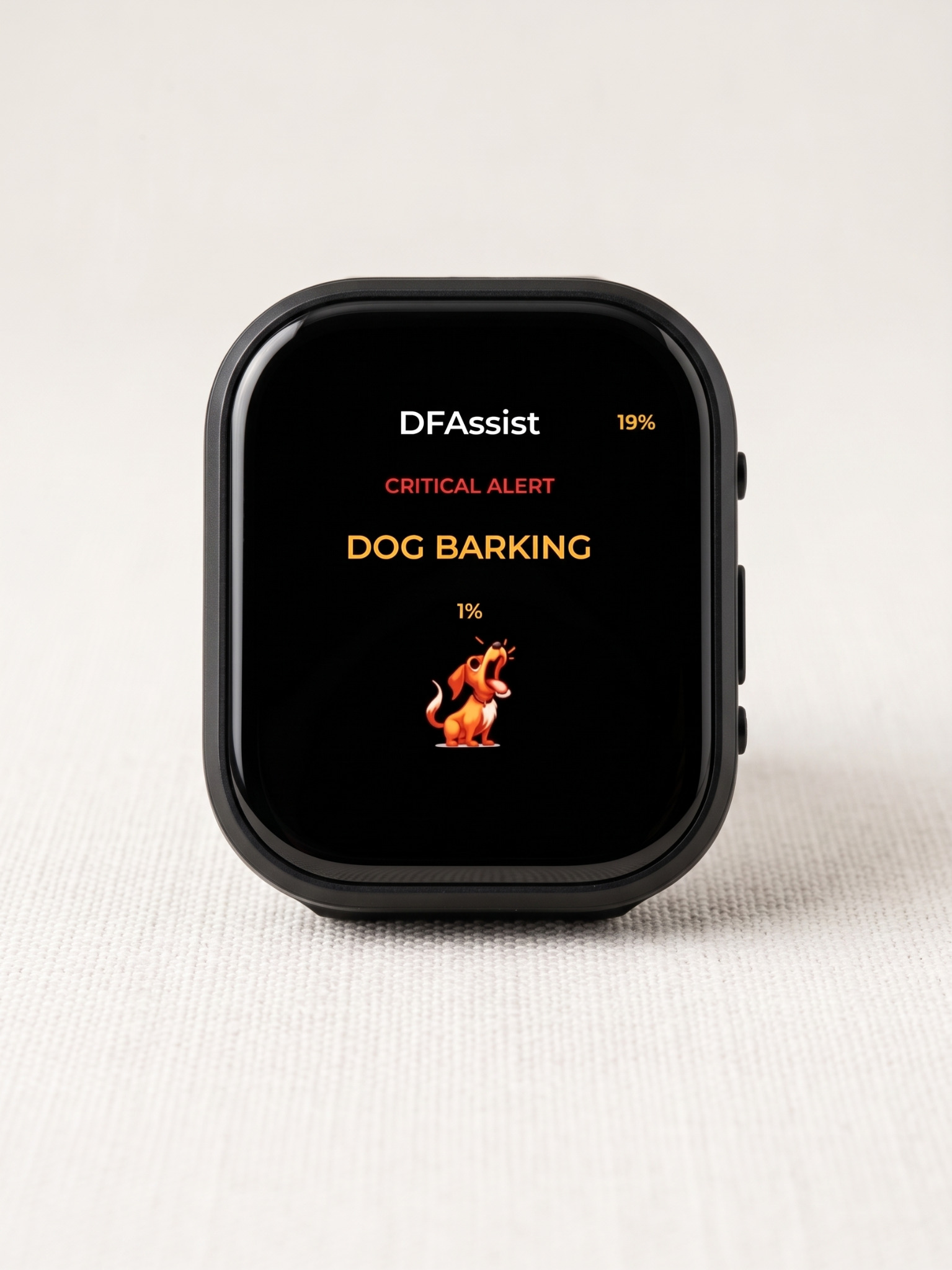
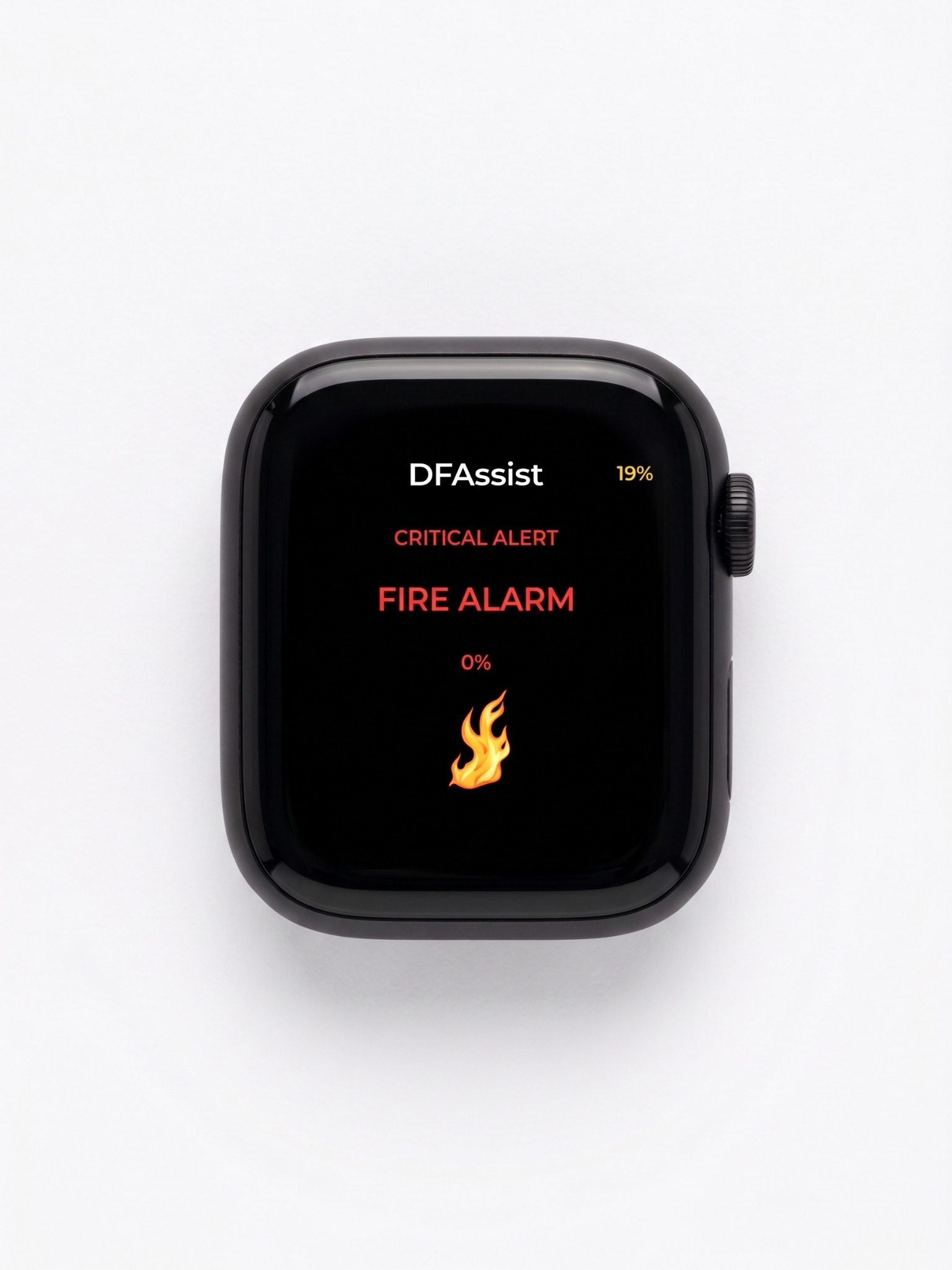
Illustrative watch visuals showing listening mode and three sound alerts. These generated images show the intended experience; they are not photographs of the physical prototype. Numbers on the watch screens are illustrative placeholders, not recognition accuracy, detection confidence, or measured performance.
FOUNDER & OWNERSHIP
I founded and own DFAssist and developed its wearable prototype to explore a more accessible way to notice important sounds.
© 2026 Ali Majid Mohammed. DFAssist — Deaf Feeling Assistant. All rights reserved.
PRESENTATIONS & PROGRAMS
Presented DFAssist virtually, sharing the prototype and its approach to independent sound awareness.
Presented DFAssist at the Kazan program in Tatarstan, Russia.